Chaosmosis: A WANG Yuyang Exhibition
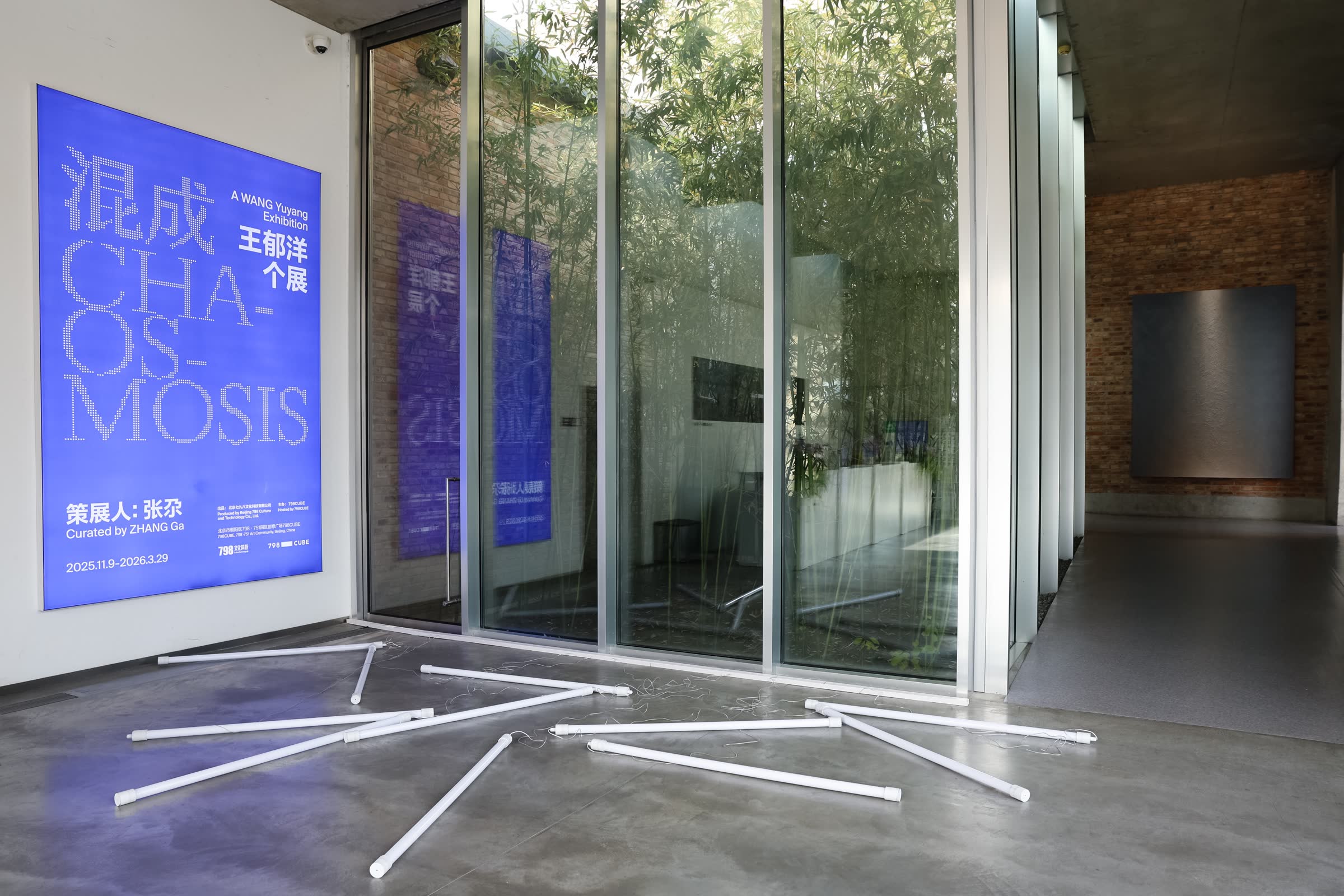
2025.11.9-2026.3.29 | 798CUBE, Creative Square, 798·751 Community, Beijing
798CUBE is pleased to present Chaosmosis: A WANG Yuyang Exhibition, curated by ZHANG Ga. On view from November 9, 2025 through March 29, 2026, the exhibition marks the artist’s first major institutional solo in Beijing.
Now entering its forth year, 798CUBE is deepening its academic focus by examining the local interdisciplinary art scene, championing contemporary practices that are globally-situated yet natively-rooted. Within this evolving trajectory, WANG Yuyang stands as both a representative figure and an exemplary practitioner. Anchored in a “techno-philosophical” framework, his practice incorporates research in artificial intelligence, synthetic biology, and neuroscience, forging a distinctively research-based creativity that meditates on the interdependence of technology and existence.
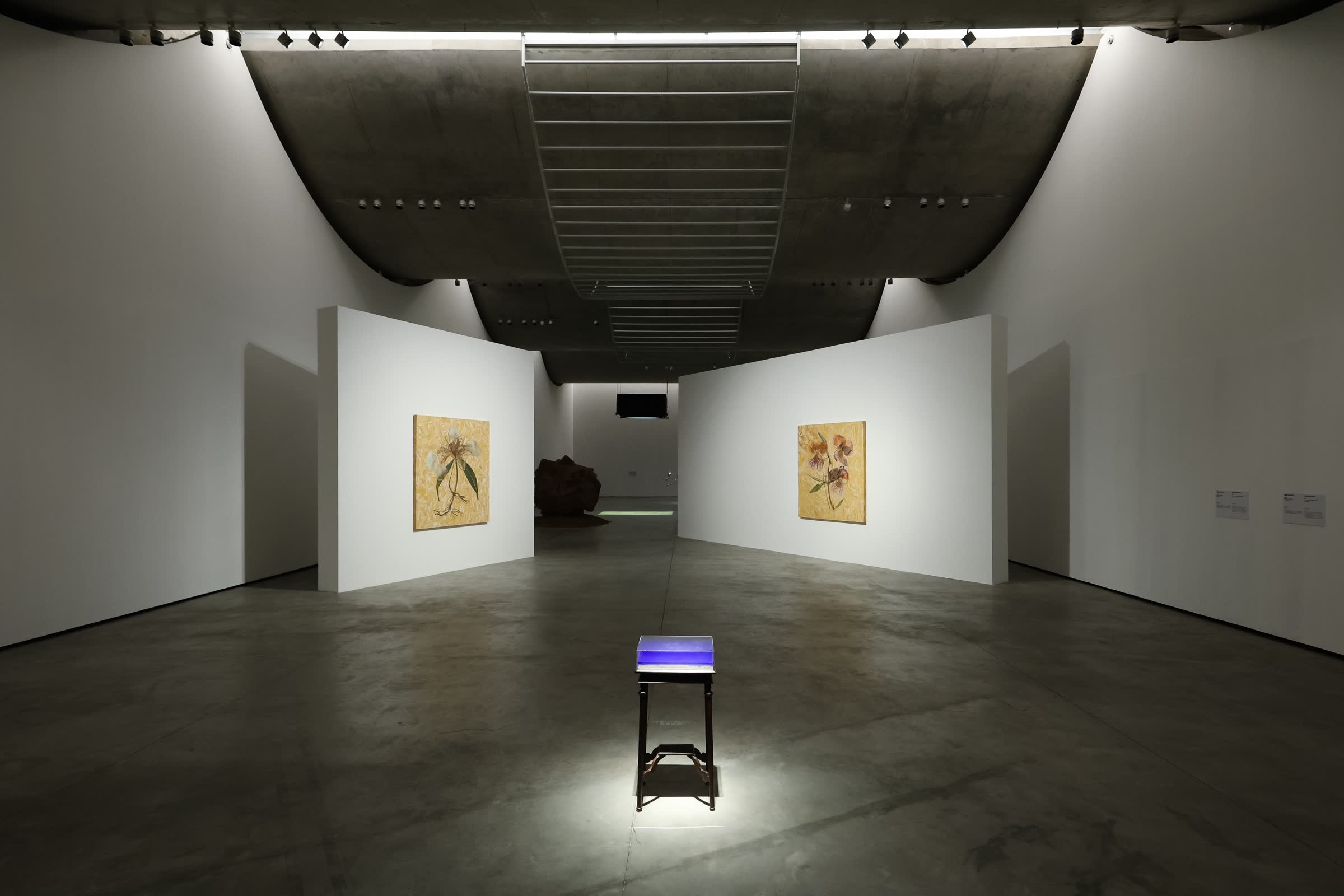
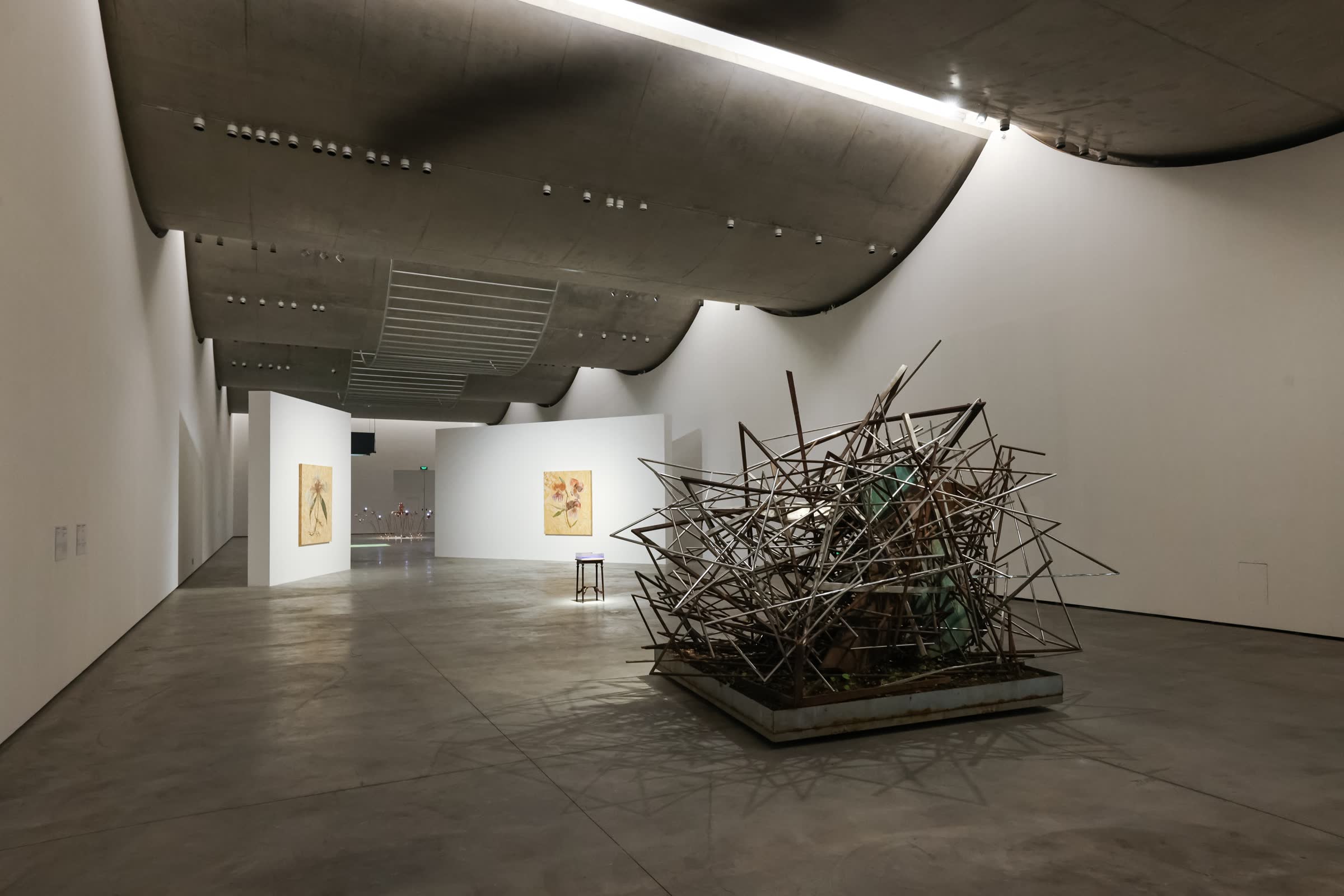
Chaosmosis traverses more than a decade of WANG’s systematic development, threading through the intersections of art, science, and technology. Across sculpture, painting, and installation, the works entwine and reverberate—oscillating between scientific rationality and poetic imagination. Machines dream, bacteria shimmer, language transforms into DNA, and fallen earth yearns for the awakening of consciousness. A theater of entanglement unfolds—one that blurs boundaries between the animate and the inanimate, thought and matter, order and flux.
Between the cosmos and chaos, the organic and the machinic, the universe and human, new forms of existence quietly emerge. Through the language of art, Chaosmosis reawakens contemplation on the condition of being, offering viewers a vantage point that transcends anthropocentrism. In doing so, it extends and deepens 798CUBE’s ongoing pursuit of dialogue between art and technology-where perception becomes inquiry, and chaos give rise to creation.
Curatorial Text
798CUBE is pleased to present Chaosmosis: A WANG Yuyang Exhibition, curated by ZHANG Ga. Traversing a decade of artistic invention, the exhibition unfolds as both survey and metamorphosis—where sculpture, painting, and installation imbricate in shifting constellations of matter and thought. Marking WANG Yuyang’s first major institutional solo exhibition in Beijing, Chaosmosis will be on view from November 9, 2025 through March 29, 2026.
WANG Yuyang’s oeuvre performs a theater of entanglements: machines that dream, bacteria that glow, language reincarnated as DNA, and slouching mud aspiring toward consciousness. His works are not merely objects but situations—turbulent interstices where the fragile membranes of life converse with the machinic abstractions of code. From the uncanny scenographies of Tonight I Shall Meditate on That Which I Am (Long Museum 2015) to more recent reterritorializations at OCAT Shanghai (2022) and Shenzhen Art Museum (2024), WANG’s trajectory has been at once evolutionarily persistent and biographically disruptive, continually reorienting his imagination.
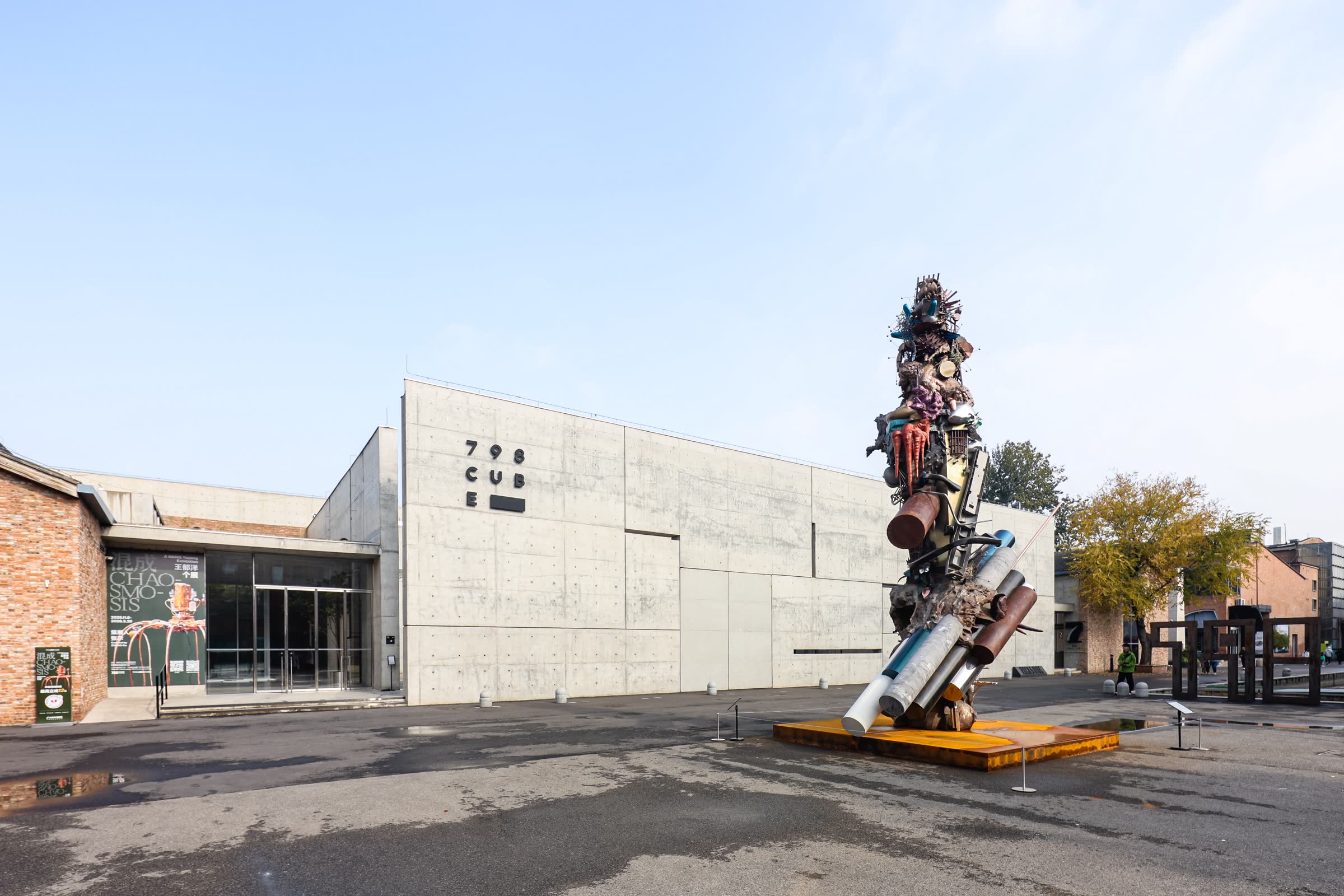
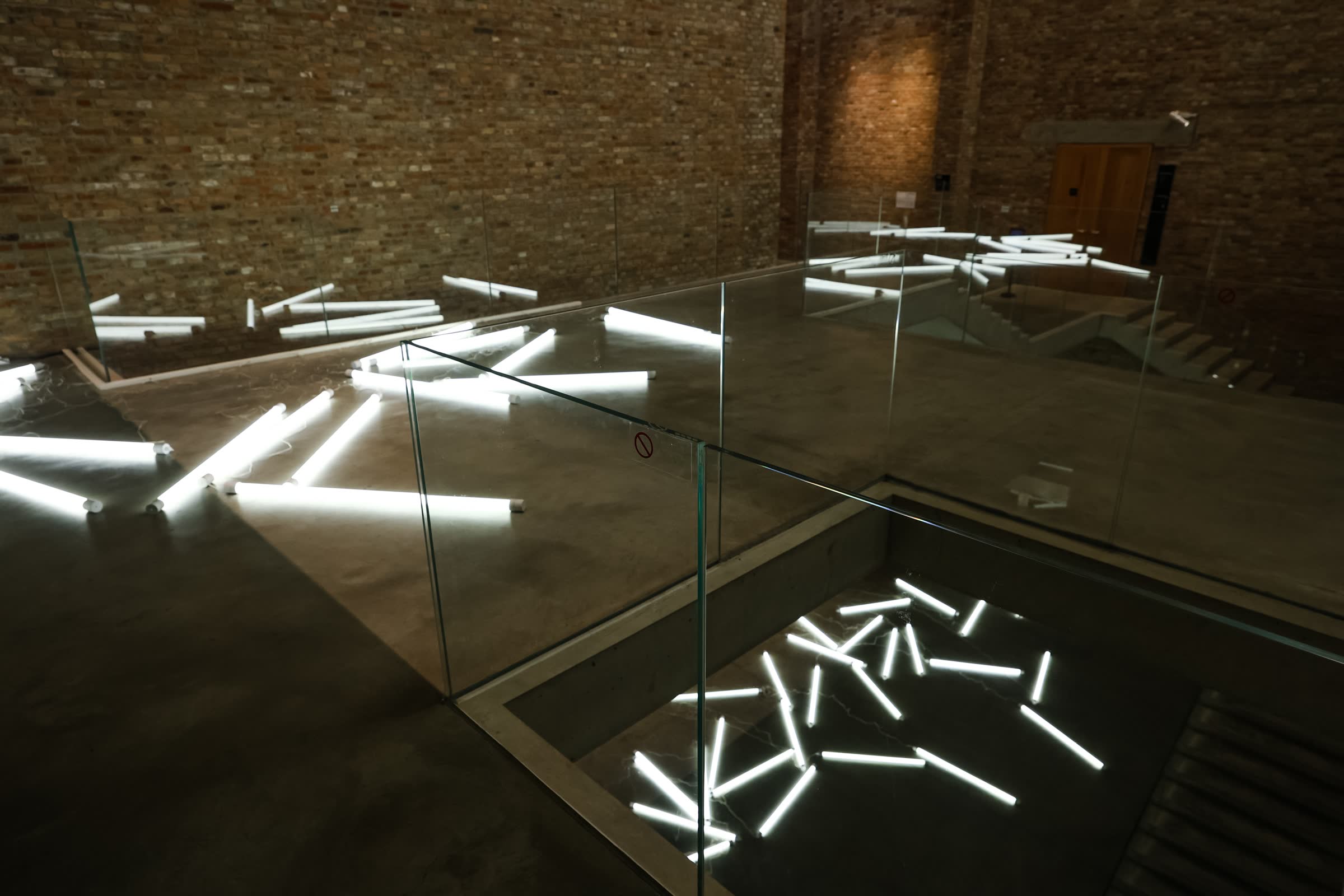
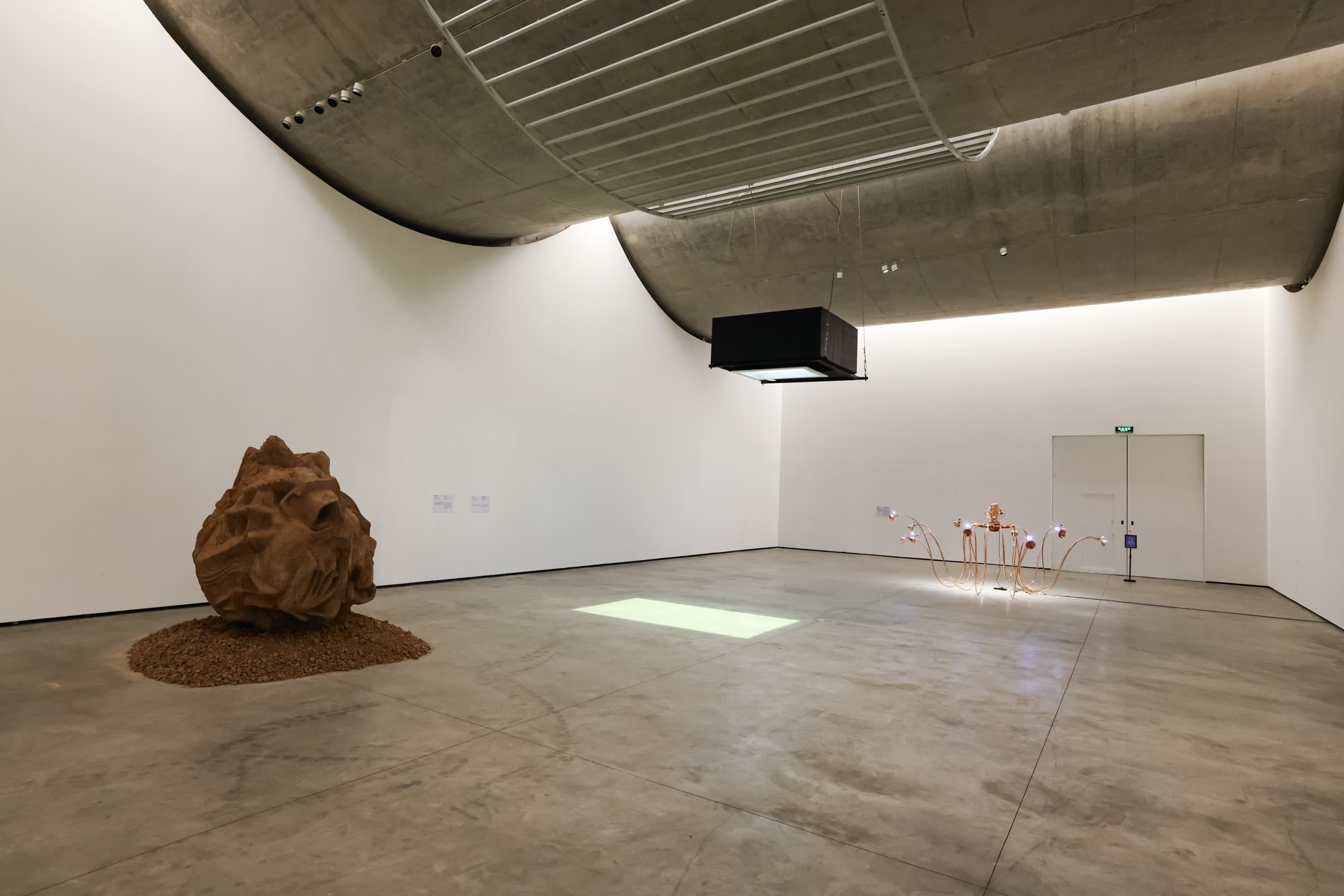
If the WANG Yuyang# series (2012–ongoing) marked a rupture from anthropomorphized objects toward intelligences of another order, Symbiosis (2013–24), unveiled in front of the space in his current 798CUBE debut, proposes a reconciliation in monumental majesty: human fancies entwine with machine vagaries in a foresighted reckoning with the dawning of the ChatGPT era. Nearby, a one-meter in diameter metal ball, steered by an AI trained on human eye movements, rolls across the forecourt to “gaze” at visitors—an uncanny reminder that autonomy is a two-way street, where inert matter may harbor latent life. Inside, wiggling light tubes gather into colonies, enacting a machinic dance neither random nor animatronic but alive with a rhythm at once cautious and desirous. Life becomes artificial and the artificial becomes life.
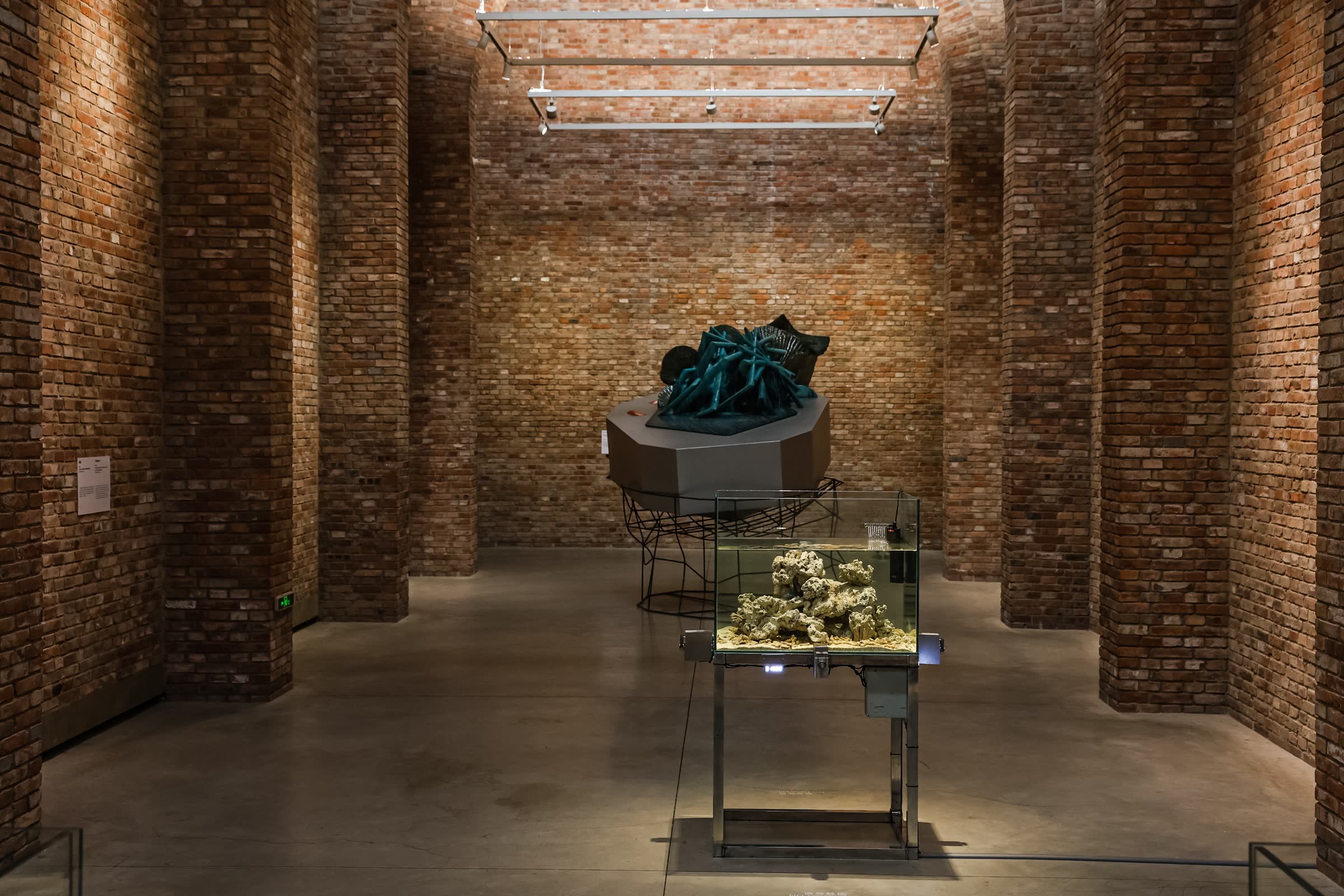
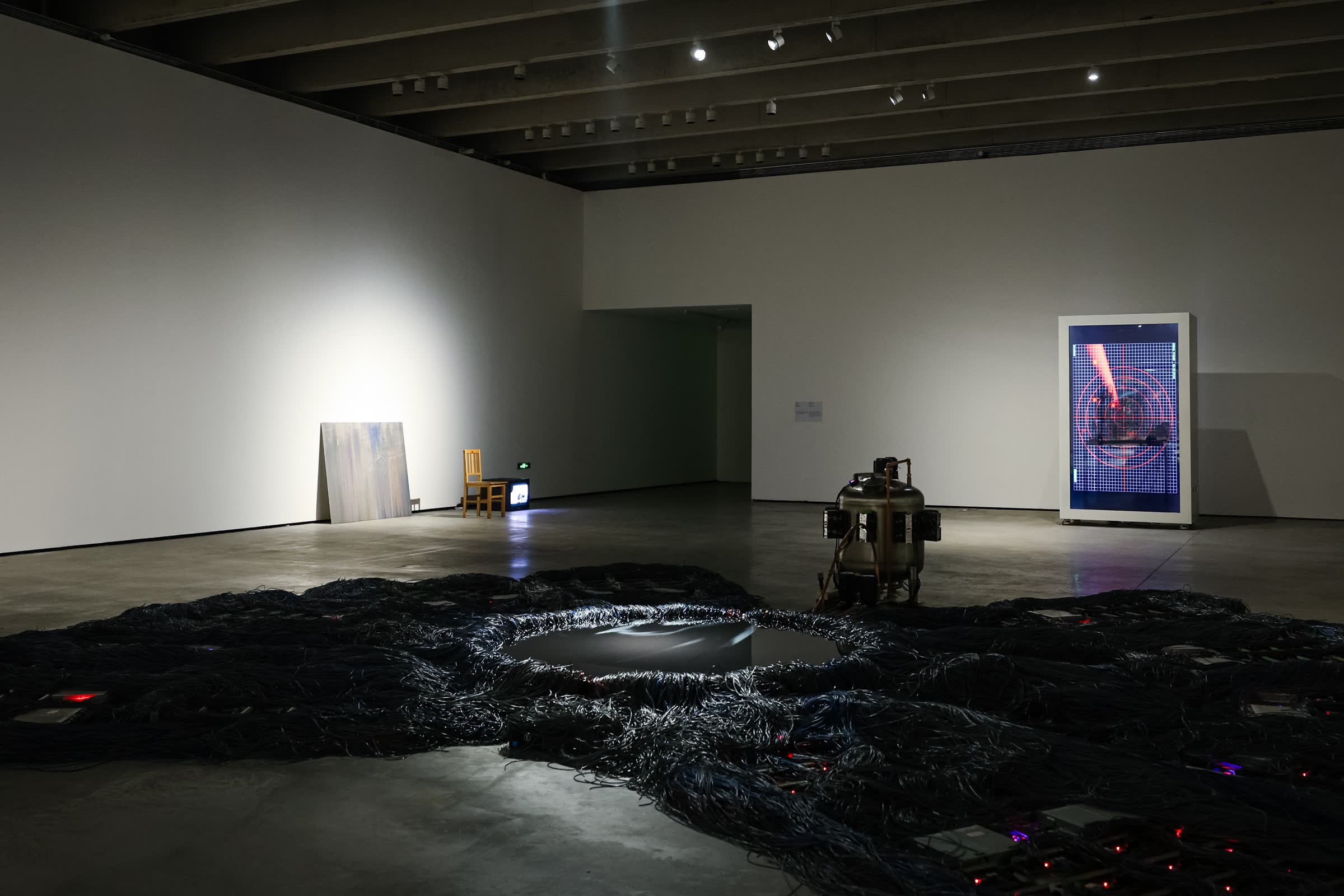
Such porous boundaries extend into works where weeds and bacteria animate derelict sculpture (The Dubious of Entanglement by Plants, 2013–24), where synthetic biology births a new Biological Klein Blue (2022), and where human language mutates into fungal DNA (Define, 2022). Code becomes incantation, life becomes inscription—as in Golem (2022), where clay, animated by biometric data, takes on a fragile humanoid form destined for decay. Forgotten Memories (2024) exhales air from 70,000-year-old glaciers, resurrecting the undead atmosphere of prehistory. Here, the transitory and the immortal stand in constant tension.
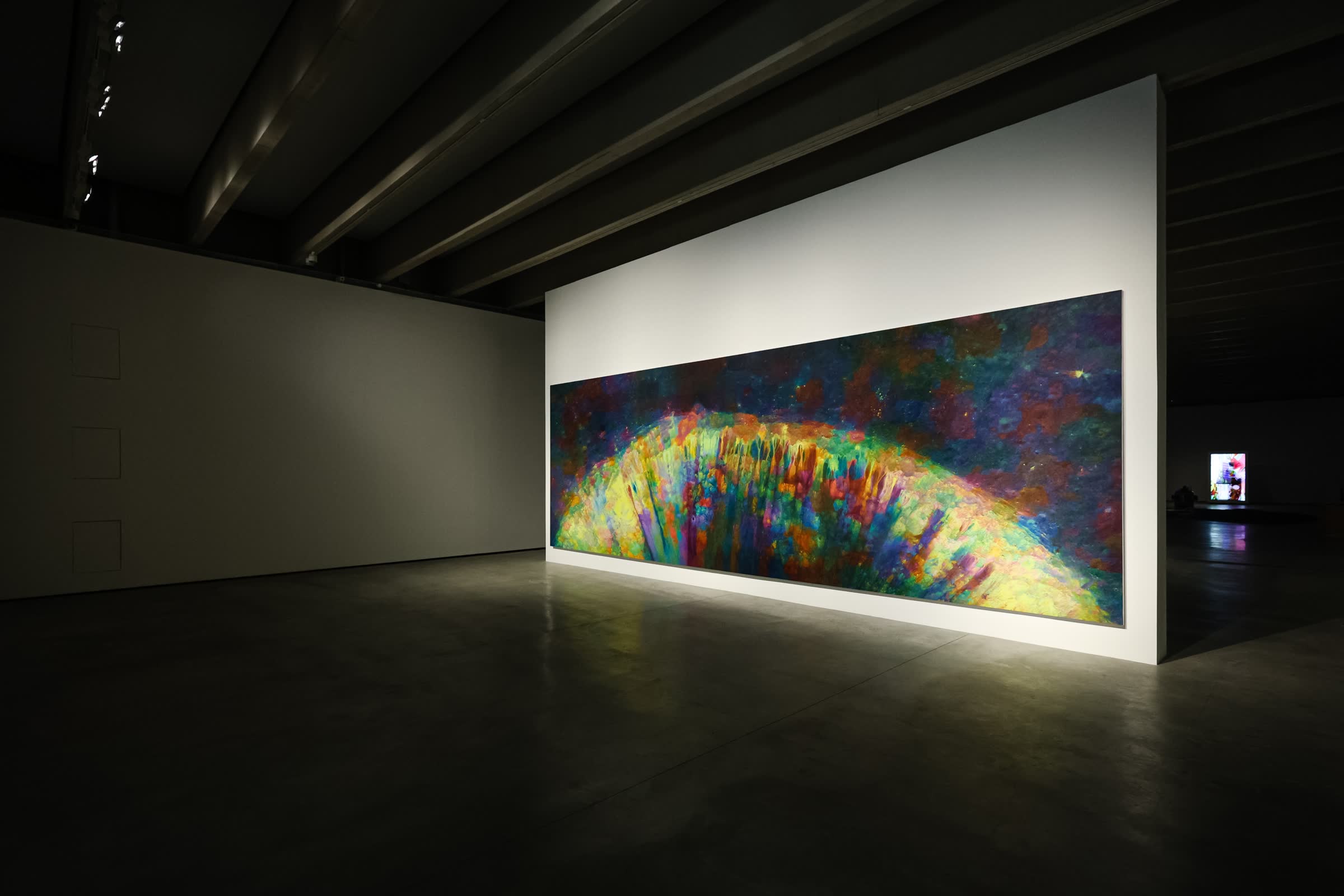
This dialectic finds its cosmic corollary in the Moon. Immortal yet transient, celestial yet adjacent, the Moon has become for WANG both a conceptual beacon and aesthetic device. Earlier works such as Artificial Moon and Liquid Moon (2022) established the lunar motif as a site of inquiry—at once myth, concept, and experiment in perception. In the Moon Series paintings presented here, illusion returns with new intensity: painting through a black-and-white camera, the artist perceives only monochrome, yet the canvas emerges in vivid color—estranged from our long-held perception of a colorless moon. The result is an actively real image born of false reproducibility, where what flickers and fades becomes the gateway to what endures unseen.
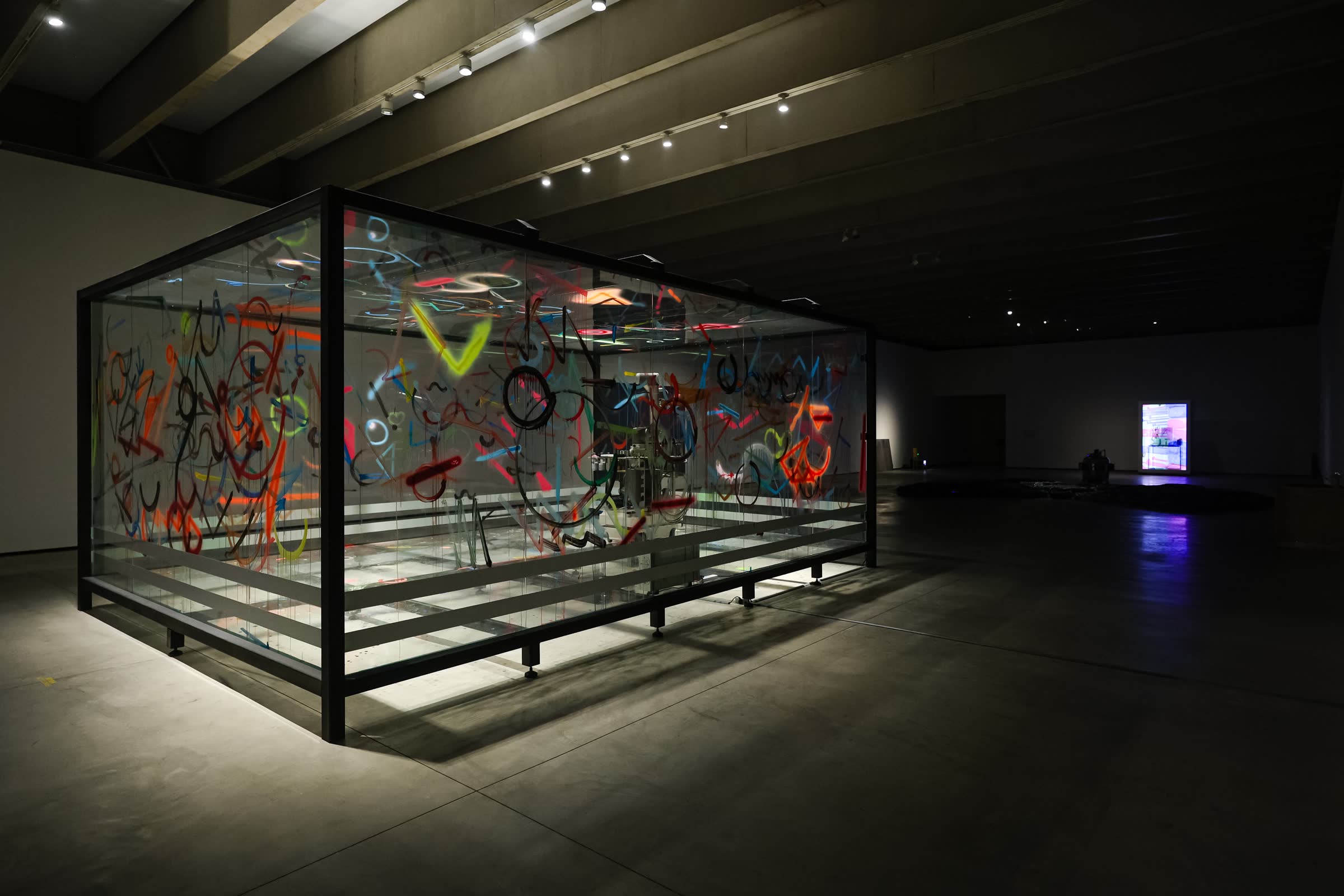
Yet the Moon also invokes dreaming, distance, memory. In Dream (2016–24), an industrial robotic hand paints on glass walls, guided by the artist’s sleeping brainwaves. A telematic embrace fuses human and machine consciousness across time zones. It is the artist mechanically sleepwalking—the dream made manifest through apparatus, collapsing distance and diminishing time.
From here the entropic force creeps in. In Indiscernable (2024), stochastic white spots converge into fleeting portraits; in Collapse (2024), a fish tank awaits its aleatory shattering; in Release (2024), a solar-powered robotic dog disappears into desert oblivion. Each work stages the inevitability of collapse—destruction as the twin of construction, chance as programmed uncontrollability.
WANG Yuayng’s world aggregates discrete elements into a precarious order in which chaos persists. Resonating with Michel Serres’ Clinamen and Félix Guattari’s Chaosmosis, turbulence becomes generative: time multiplies, space bifurcates. Against the obsolescence of anthropocentric history on the one hand and the AI-infused anxieties of a usurped human subject on the other, his work charts a contemplative path forward—a grand narrative of another kind: a fluid interplay between order and disorder, between biological, machinic, and cosmic forces. Out of chaos arises continuance; out of collapse, another beginning; out of the legacy of humanism, the germination of renewed human empathy.